
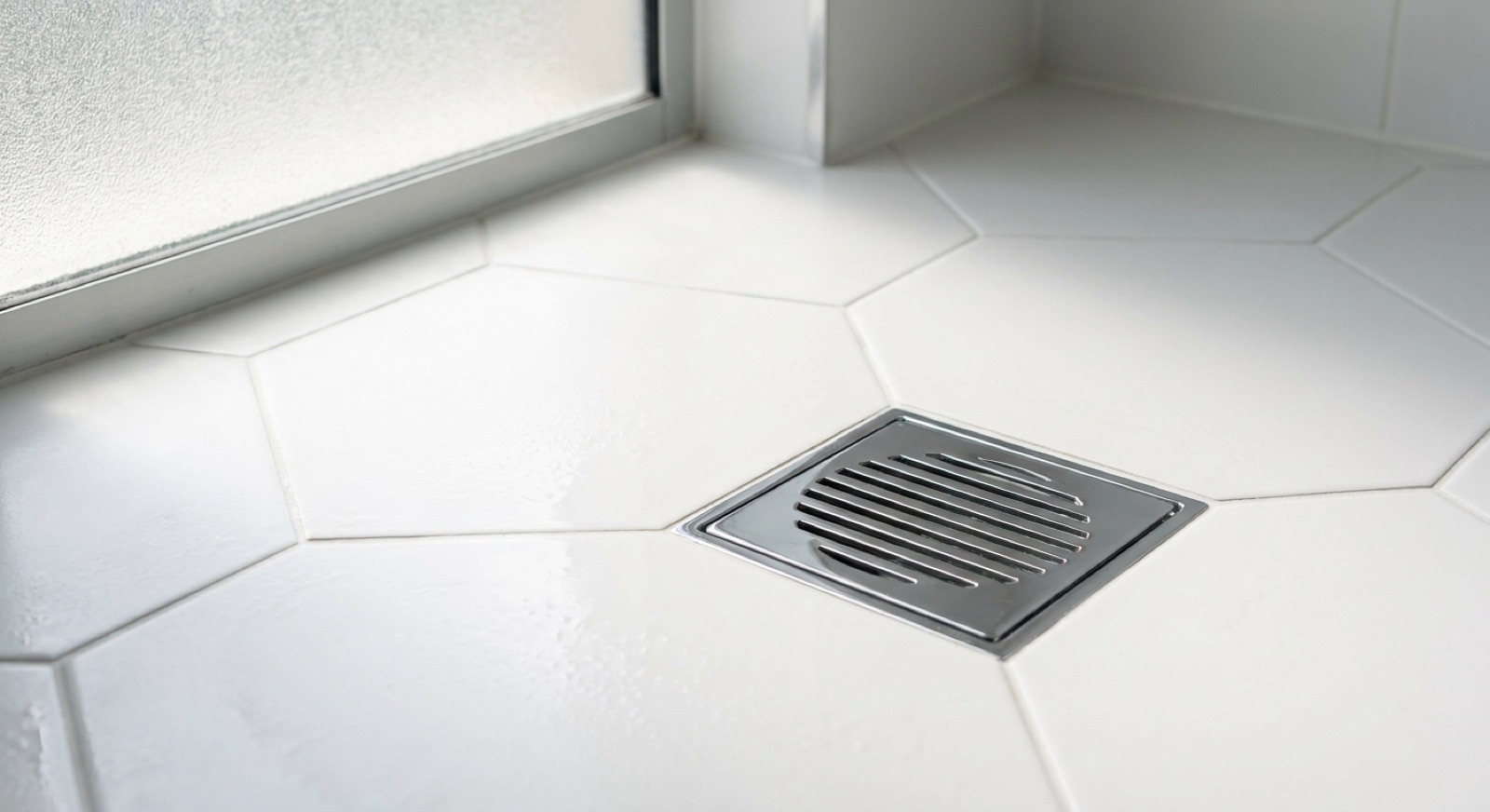
Why does my drain smell like rotten eggs?
Rotten eggs = hydrogen sulphide = sewer gas escaping where it shouldn't. The usual suspect is a dried-out water trap — the water sitting in the U-bend of every drain is what seals sewer gas out, and in unused drains it simply evaporates.
Every fixture in your home — sinks, showers, floor wastes — has a trap holding a plug of water between your room and the sewer. Guest bathroom nobody uses? Laundry floor waste behind the machine? A few weeks of evaporation and the seal is gone; the sewer is now ventilating into your house.
The five causes, cheapest fix first
- Dry trap (free). Pour a bucket of water into every floor waste and unused fixture. A tablespoon of cooking oil on top slows future evaporation. If the smell fades over a day — solved.
- Biofilm in the drain (nearly free). Hair, soap scum and bacteria coat the first metre of shower and basin drains and can smell convincingly like sewage. Remove the grate, scrub with a bottle brush and hot soapy water. (Smells worst when water runs — the flow pushes air past the gunk.)
- Blocked overflow relief gully ($0 to check). The ORG is the grated outdoor drain that's designed to overflow outside instead of inside if the sewer blocks. If it's buried under pot plants, paved over, or its grate is stuck fast, sewer gas and worse can back up toward the house. Make sure it's clear, and the grate sits loose.
- Partial sewer blockage (plumber). Gurgling + smell + slow drains = a blockage building downstream. Gas trapped behind the obstruction escapes through your fixtures. This one gets worse, never better — see blocked drains.
- Cracked pipe or failed vent (plumber). A persistent smell you can't trace — especially in one room, or strongest at skirting level — can be a cracked sewer pipe under the slab or a blocked/disconnected vent stack. This is the one you don't ignore: wastewater may be leaking where you can't see it.
Is sewer smell dangerous?
At typical household concentrations it's unpleasant rather than acutely dangerous — but it's never normal. A persistent smell means sewer gas has a path into your home, and prolonged exposure can cause headaches, nausea and eye irritation. Strong smell + symptoms: ventilate and get it fixed promptly.
The real risk isn't usually the gas — it's what the gas is telling you. A failed seal gets worse. A partial blockage becomes an overflow. A cracked pipe under the slab becomes a soggy foundation. Cheap fix now beats expensive fix later, every time.
Finding the source: a 10-minute hunt
- One room or everywhere? One room points at that room's trap, seal or drain. Everywhere points at the ORG, vent or main line.
- Constant or only when water runs? Constant = dry trap or crack. Only-with-water = biofilm, venting, or a partial blockage being disturbed.
- Sniff low. Sewer gas sources smell strongest at floor level — check floor wastes and the base of the toilet (a failed wax/rubber pan seal is a classic).
- Check outside. Smell near the ORG or a soggy, suspiciously green patch of lawn moves this from "smell" to "sewer problem".
- After the flush test: toilets gurgling when other fixtures drain is the classic early sign of a main-line blockage.